Blueprint fashion education
Blueprint fashion education
Role
UX/UI Designer
Approach
Lean UX
Duration
7 weeks
Medium
Fashion Education
About Blueprint
About Blueprint
What is Blueprint?
What is Blueprint?
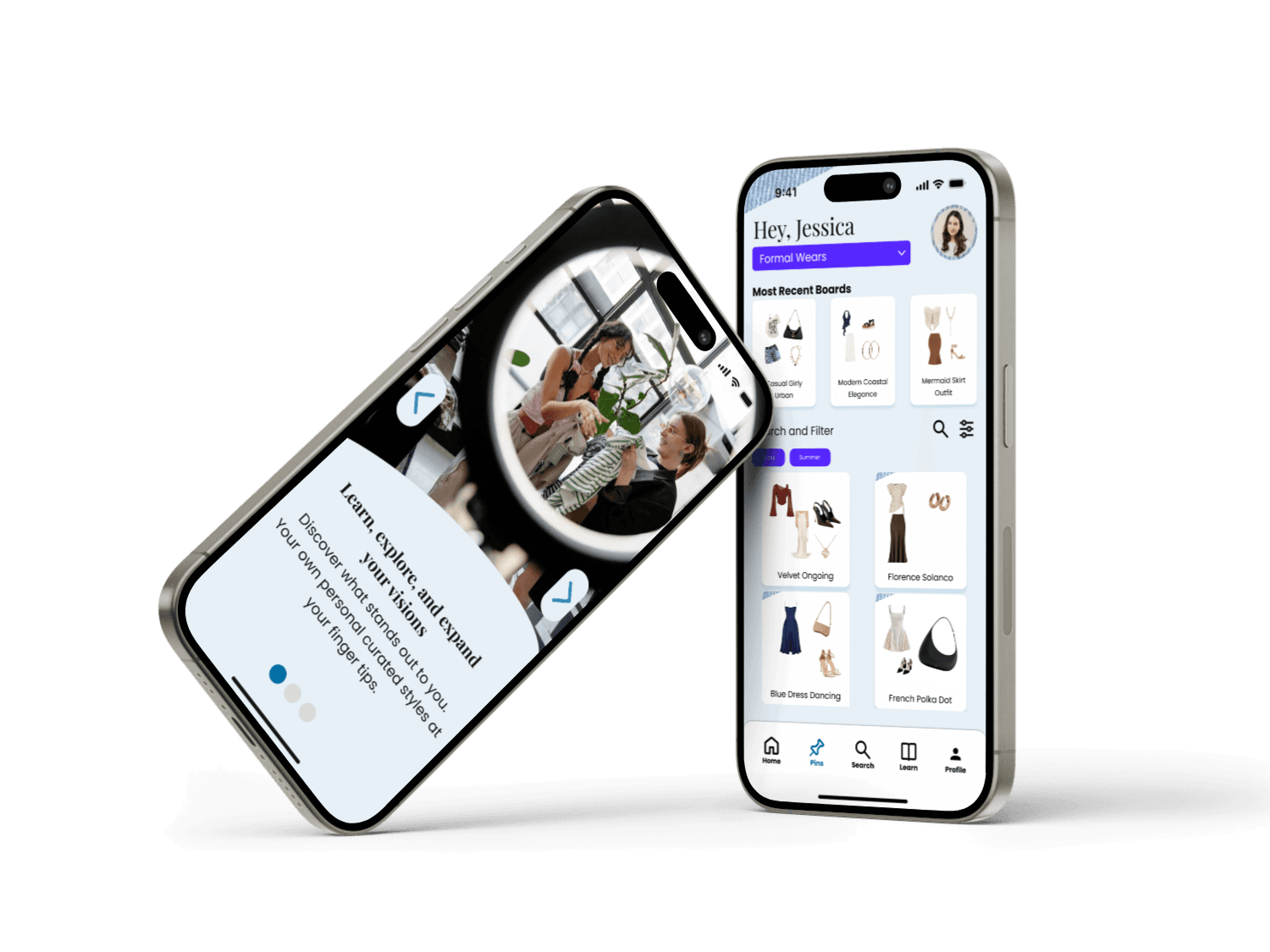
A free-form fashion education application that allows users to learn, explore, and build around their own personal fashion style.
Primarily, through guided lessons, interactive mood boards, and a curated discovery space. The inspiration behind our application was to improve consumer research on certain outfit and style discovery. Our goal was to make our application educational, fun, gamified, and interactive.
A free-form fashion education application that allows users to learn, explore, and build around their own personal fashion style.
Primarily, through guided lessons, interactive mood boards, and a curated discovery space. The inspiration behind our application was to improve consumer research on certain outfit and style discovery. Our goal was to make our application educational, fun, gamified, and interactive.
A free-form fashion education application that allows users to learn, explore, and build around their own personal fashion style.
Primarily, through guided lessons, interactive mood boards, and a curated discovery space. The inspiration behind our application was to improve consumer research on certain outfit and style discovery. Our goal was to make our application educational, fun, gamified, and interactive.
The Problem
The Problem
The problem with Fashion Education
The problem with Fashion Education
Blueprint is looking to address users who often struggle to discover and customize their personal style. Existing platforms focus on inspiration or shopping, but few offer education, guided exploration, and creative expression in one space.
Blueprint is looking to address users who often struggle to discover and customize their personal style. Existing platforms focus on inspiration or shopping, but few offer education, guided exploration, and creative expression in one space.
Competitive Audit
What the Competition Lacks
What the Competition Lacks
My team and I were all avid within the world of fashion, however, we all noticed key within common fashion education. The majority market focuses on users who ALREADY have a creative vision, but these services lack basic educational and discovery fundamentals
Competitors Researched:
Pintrest
Stich Fix
Udemy
Skillshare
Additionally, competitors have features to educate users in some way, however they each either had to much overwhelming content overload or were to niche not unique to the user
My team and I were all avid within the world of fashion, however, we all noticed key within common fashion education. The majority market focuses on users who ALREADY have a creative vision, but these services lack basic educational fundamentals
Competitors Researched:
Pintrest
Stich Fix
Udemy
Skillshare
All competitors have features to educate users in some way, however they each either had to much overwhelming content overload or were to niche not unique to the user
My team and I were all avid within the world of fashion, however, we all noticed key within common fashion education. The majority market focuses on users who ALREADY have a creative vision, but these services lack basic educational fundamentals
Competitors Researched:
Pintrest
Stich Fix
Udemy
Skillshare
All competitors have features to educate users in some way, however they each either had to much overwhelming content overload or were to niche not unique to the user
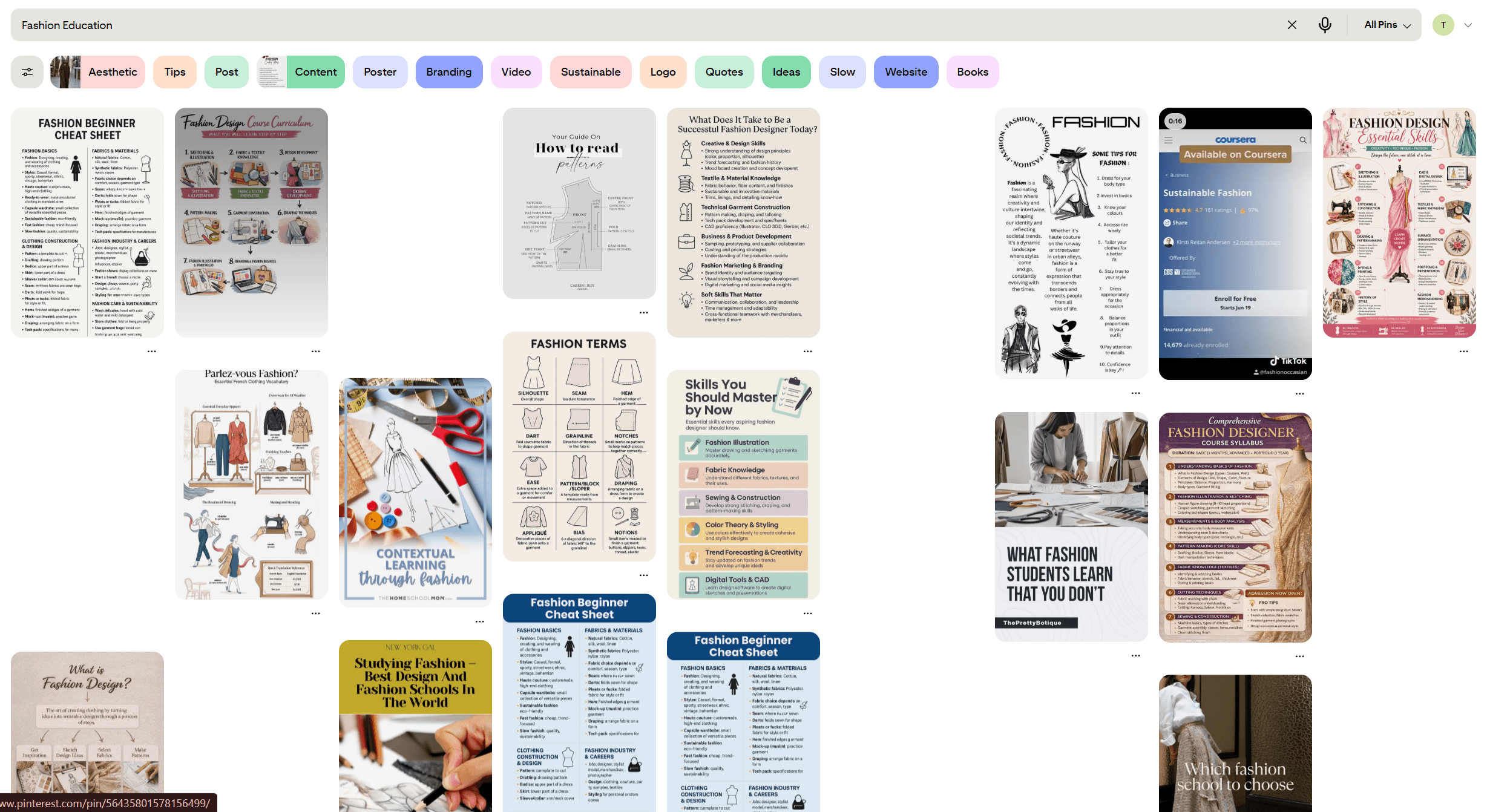
Pinterest: Image-heavy overload
Pintrest:
Image heavy overload
Skillshare: Cluttered information
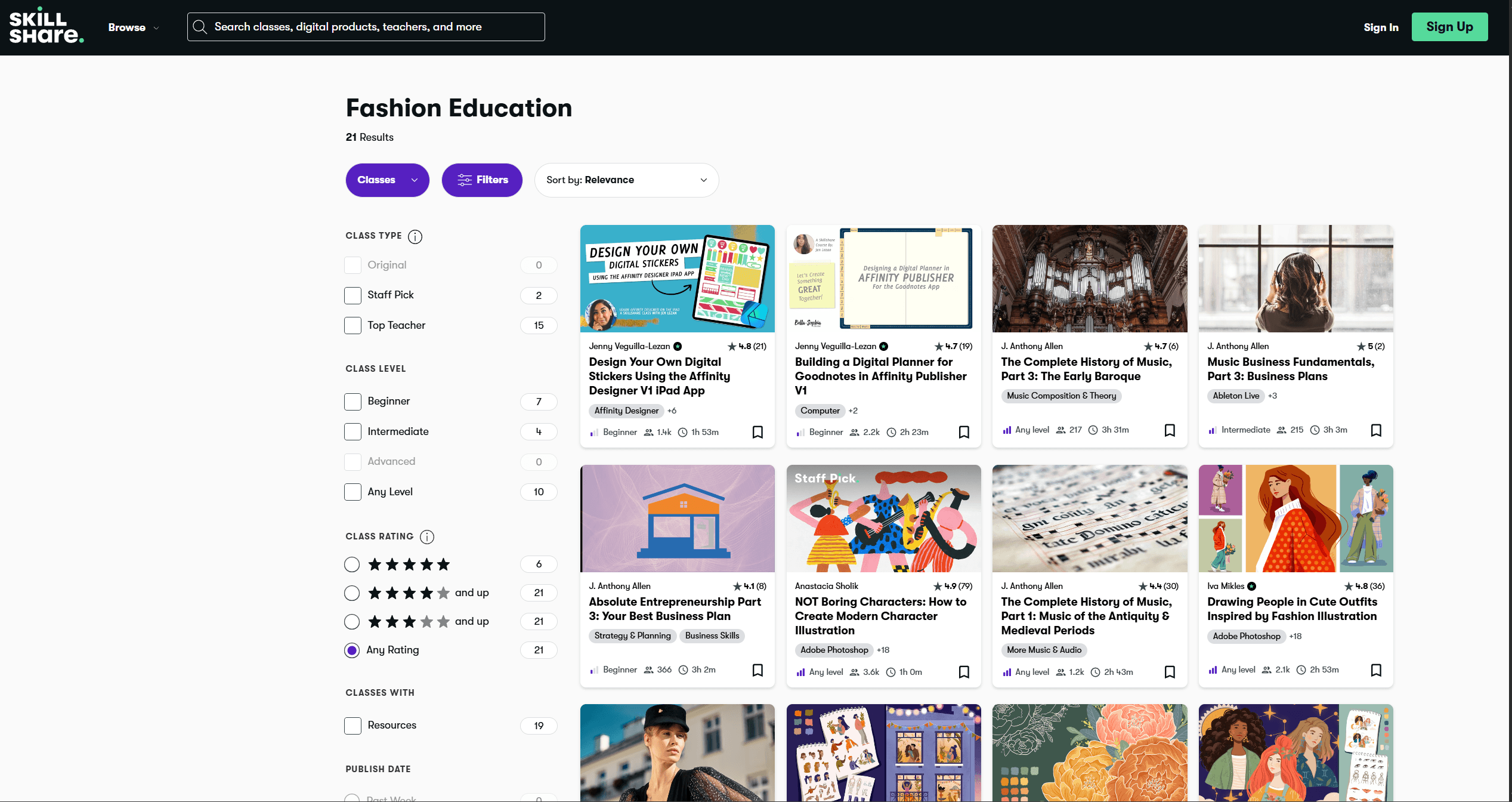
Skillshare: Cluttered information
Rapid Solutioning
Our Approach
Our Approach
My team and I utilized Lean UX with agile, which is a collaborative design methodology that focuses on forming assumptions, customer collaboration, and constant iteration. The Lean UX Canvas was also utilized to create mock real-world scenarios for our product, such as business problems, outcomes, and user benefits. Our project was condensed into 2 two-week design sprints, ranging from a multitude of team meetings and tests.
Design needs for both sprints
Proto-personas
MVP prototypes
MVP usability test
My team and I utilized Lean UX with agile, which is a collaborative design methodology that focuses on forming assumptions, customer collaboration, and constant iteration. The Lean UX Canvas was also utilized to create mock real-world scenarios for our product, such as business problems, outcomes, and user benefits. Our project was condensed into 2 two-week design sprints, ranging from a multitude of team meetings and tests.
Design needs for both sprints
Proto-personas
MVP prototypes
MVP usability test
My team and I utilized Lean UX with agile, which is a collaborative design methodology that focuses on forming assumptions, customer collaboration, and constant iteration. The Lean UX Canvas was also utilized to create mock real-world scenarios for our product, such as business problems, outcomes, and user benefits. Our project was condensed into 2 two-week design sprints, ranging from a multitude of team meetings and tests.
Design needs for both sprints
Proto-personas
MVP prototypes
MVP usability test
Creating our personas
Proto-Personas
Proto-Personas
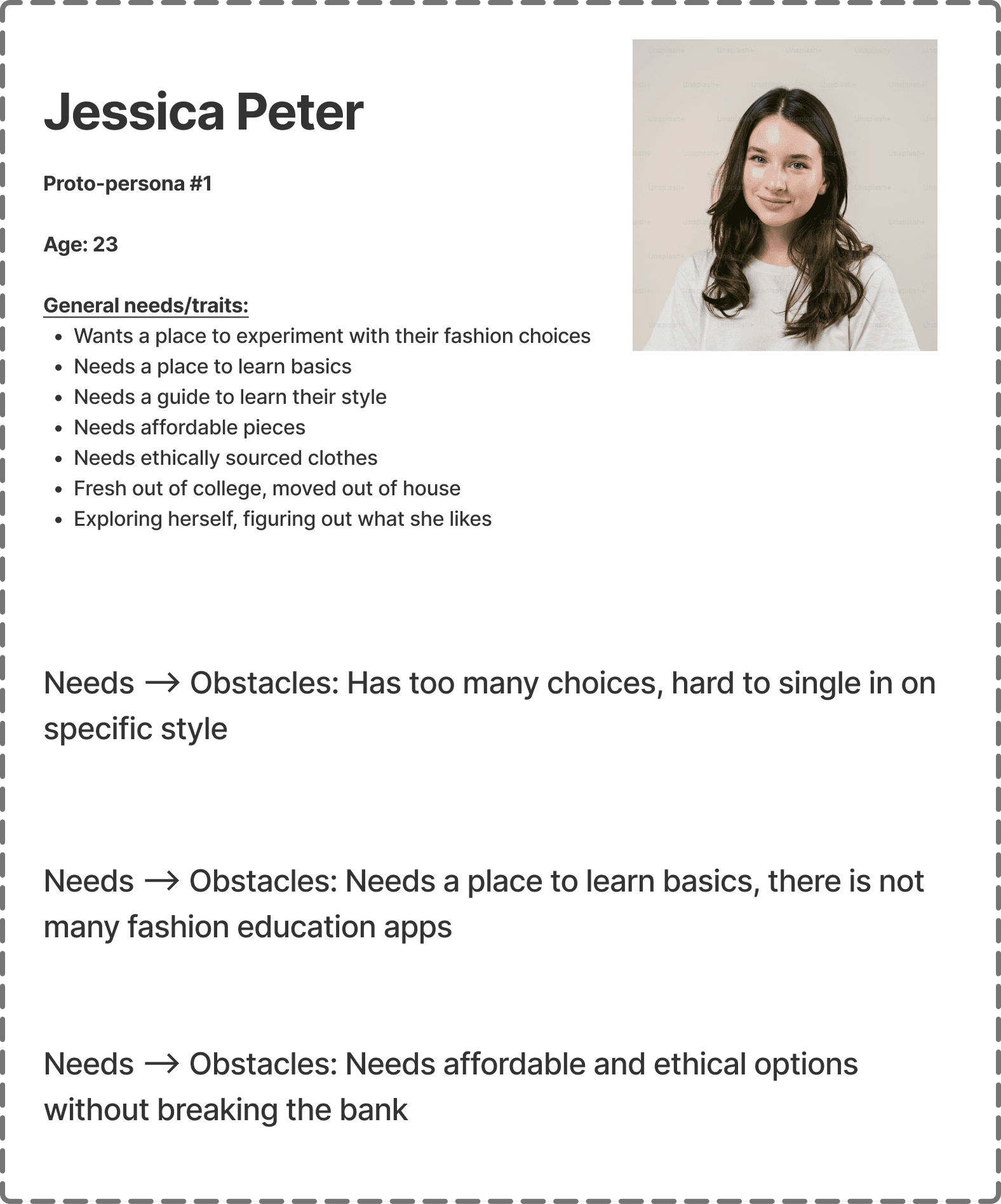
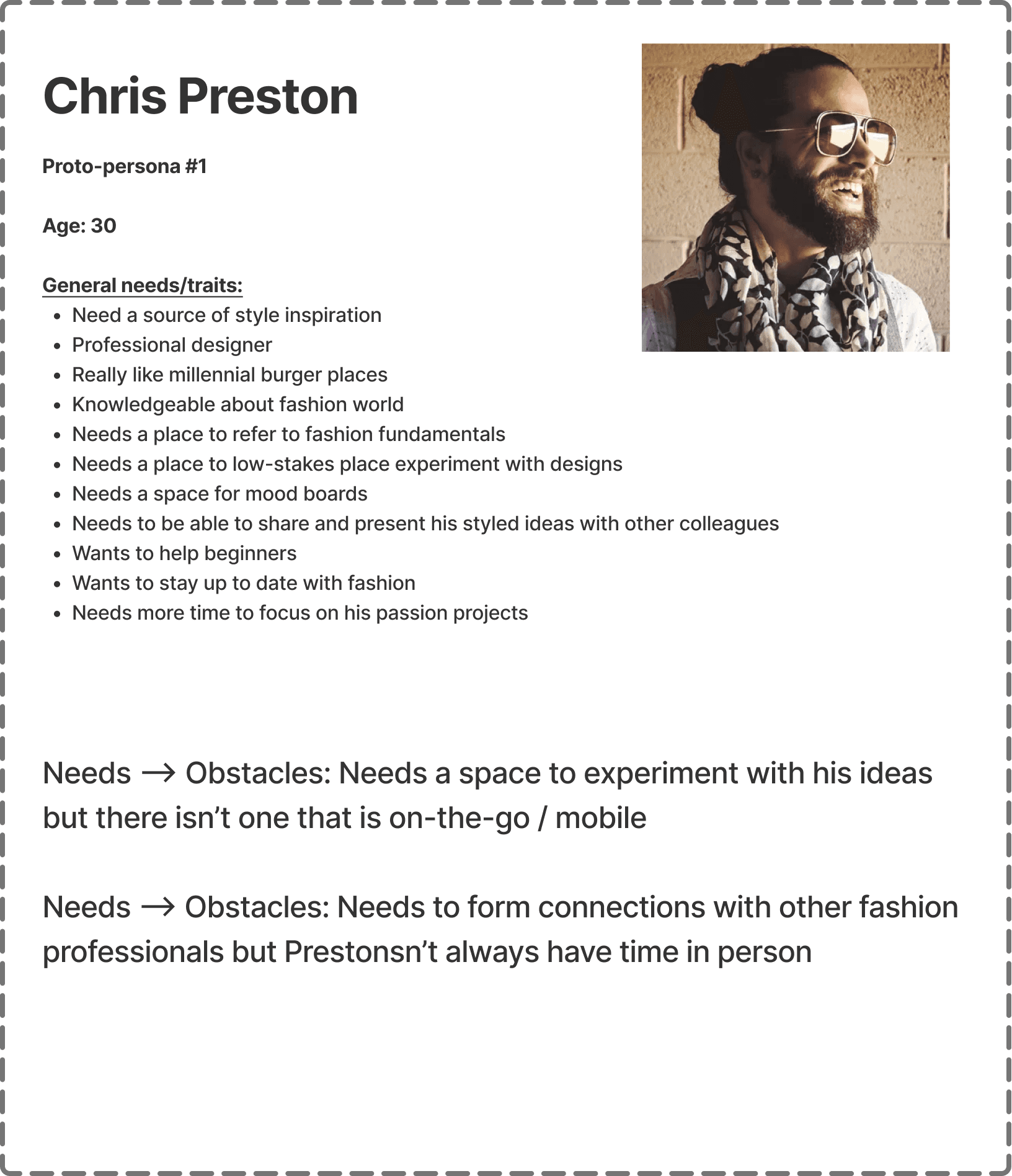
Our proto personas were determined by the team to display two potential users who would use BluePrint:
Jessica Parker (Primary) - Simple post-grad looking for a guide to learn their own style without to many options.
Chris Preston - More experienced fashion enthusiast looking for a place to store his low-stakes experimental fashion designs.
Our proto personas were determined by the team to display two potential users who would use BluePrint:
Jessica Parker (Primary) - Simple post-grad looking for a guide to learn their own style without to many options.
Chris Preston - More experienced fashion enthusiast looking for a place to store his low-stakes experimental fashion designs.
Our proto personas were determined by the team to display two potential users who would use BluePrint:
Jessica Parker (Primary) - Simple post-grad looking for a guide to learn their own style without to many options.
Chris Preston - More experienced fashion enthusiast looking for a place to store his low-stakes experimental fashion designs.
Sprint 1 and Sprint 2
MVPs and Sprint Backlogs
MVPs and Sprint Backlogs
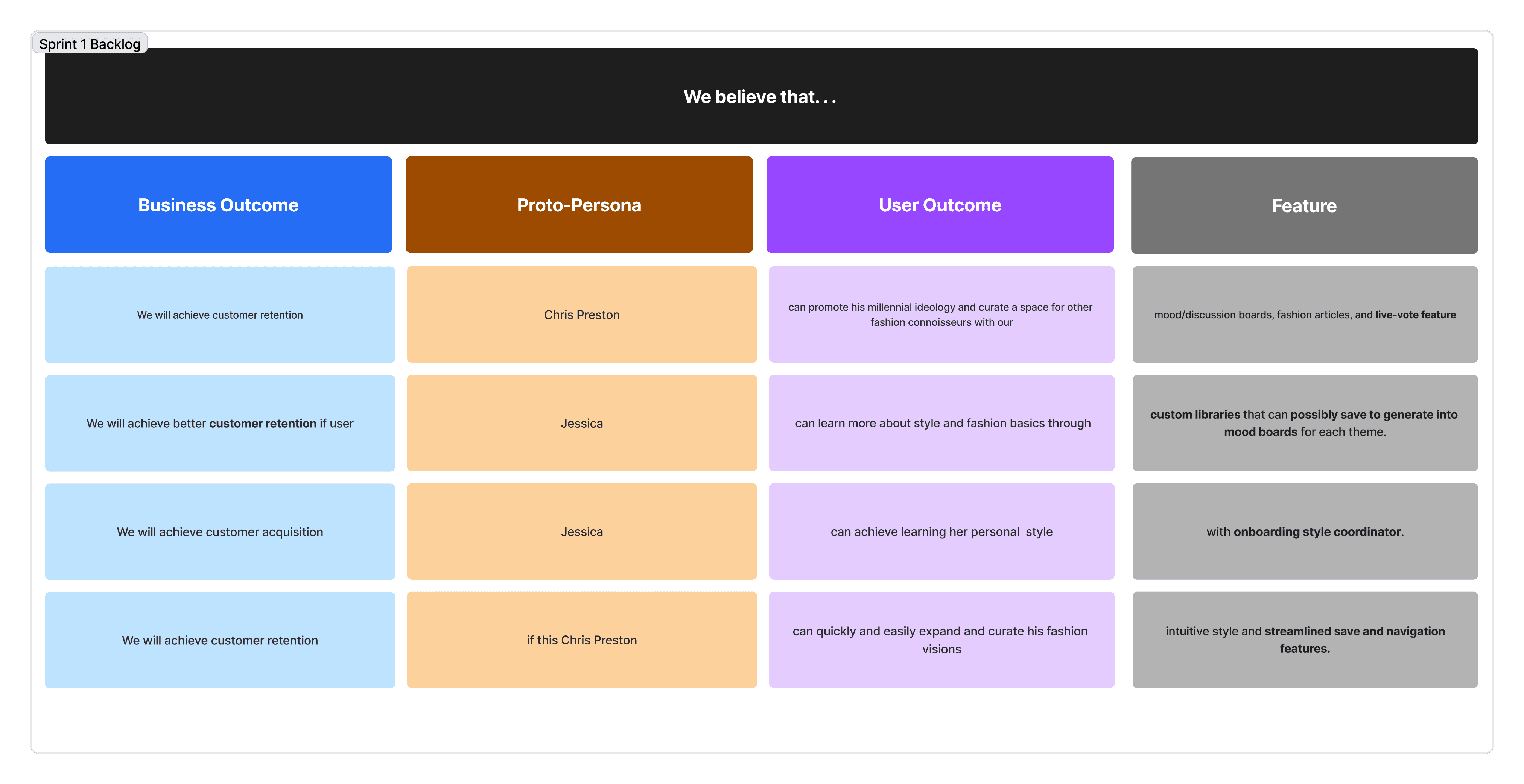
The Lean UX canvas helped my team and me create our hypothesis table for determining which features would need to be tested and implemented first for each MVP. Each MVP was low-fidelity prototyped and tested for primary functionality and user feedback. As each MVP was tested after each sprint, we needed to determine which to keep and which to scrap. Our MVPs were each stored in our sprint backlogs.
Sprint 1 MVPs.
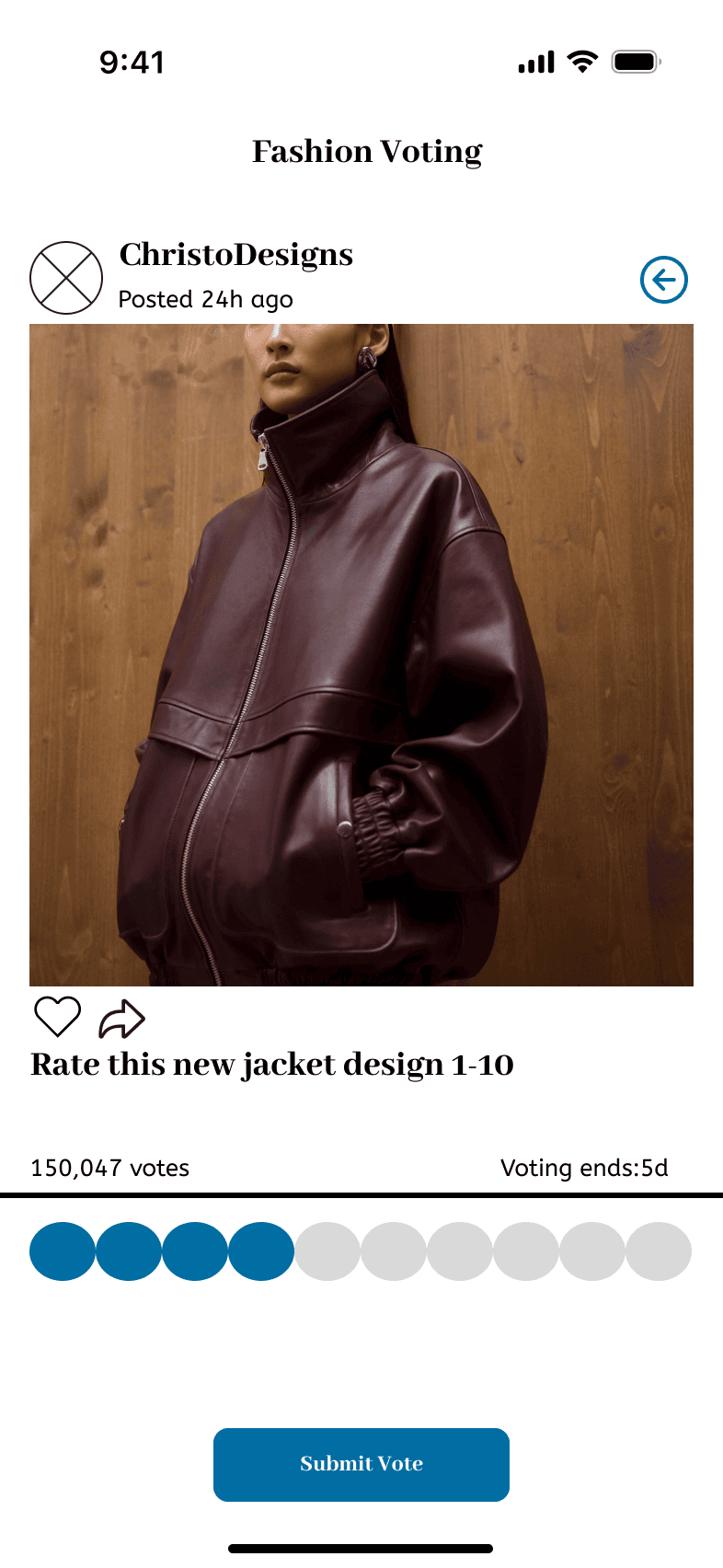
Live-fashion social vote features to help users vote on their favorite styles
Custom mood board libraries for organizations
Onboarding style coordinator
Streamlined save and navigation features
Sprint 2 MVPs.
Create gamified learning modules
More personalized onboarding (demographics referenced)
More detailed onboarding style coordinator
Expanding streamlined save and navigation features
The Lean UX canvas helped my team and me create our hypothesis table for determining which features would need to be tested and implemented first for each MVP. Each MVP was low-fidelity prototyped and tested for primary functionality and user feedback. As each MVP was tested after each sprint, we needed to determine which to keep and which to scrap. Our MVPs were each stored in our sprint backlogs.
Sprint 1 MVPs.
Live-fashion social vote features to help users vote on their favorite styles
Custom mood board libraries for organizations
Onboarding style coordinator
Streamlined save and navigation features
Sprint 2 MVPs.
Create gamified learning modules
More personalized onboarding (demographics referenced)
More detailed onboarding style coordinator
Expanding streamlined save and navigation features
The Lean UX canvas helped my team and me create our hypothesis table for determining which features would need to be tested and implemented first for each MVP. Each MVP was low-fidelity prototyped and tested for primary functionality and user feedback. As each MVP was tested after each sprint, we needed to determine which to keep and which to scrap. Our MVPs were each stored in our sprint backlogs.
Sprint 1 MVPs.
Live-fashion social vote features to help users vote on their favorite styles
Custom mood board libraries for organizations
Onboarding style coordinator
Streamlined save and navigation features
Sprint 2 MVPs.
Create gamified learning modules
More personalized onboarding (demographics referenced)
More detailed onboarding style coordinator
Expanding streamlined save and navigation features
Sprint 1 Backlog
Sprint 1 Backlog
Sprint 2 Backlog
Sprint 2 Backlog

Sprint 1
Testing Our MVPs (Minimum Viable Products)
Testing Our MVPs (Minimum Viable Products)
Unlike Goal-Directed design, Lean UX relies more upon consistent testing, user feedback, and continuous learning. Thus, our team interviewed and conducted usability tests on our low-fidelity prototype MVPs. The primary purpose of our test was to see user flows and behaviors to determine what needed to be changed and/or implemented in the future.
MVP prototypes tested:
Live-fashion social vote features to help users vote on their favorite styles
Custom mood board libraries for organizations
Onboarding style coordinator
Streamlined save and navigation features
Unlike Goal-Directed design, Lean UX relies more upon consistent testing, user feedback, and continuous learning. Thus, our team interviewed and conducted usability tests on our low-fidelity prototype MVPs. The primary purpose of our test was to see user flows and behaviors to determine what needed to be changed and/or implemented in the future.
MVP prototypes tested:
Live-fashion social vote features to help users vote on their favorite styles
Custom mood board libraries for organizations
Onboarding style coordinator
Streamlined save and navigation features
Unlike Goal-Directed design, Lean UX relies more upon consistent testing, user feedback, and continuous learning. Thus, our team interviewed and conducted usability tests on our low-fidelity prototype MVPs. The primary purpose of our test was to see user flows and behaviors to determine what needed to be changed and/or implemented in the future.
MVP prototypes tested:
Live-fashion social vote features to help users vote on their favorite styles
Custom mood board libraries for organizations
Onboarding style coordinator
Streamlined save and navigation features
Sprint 1 Introduction
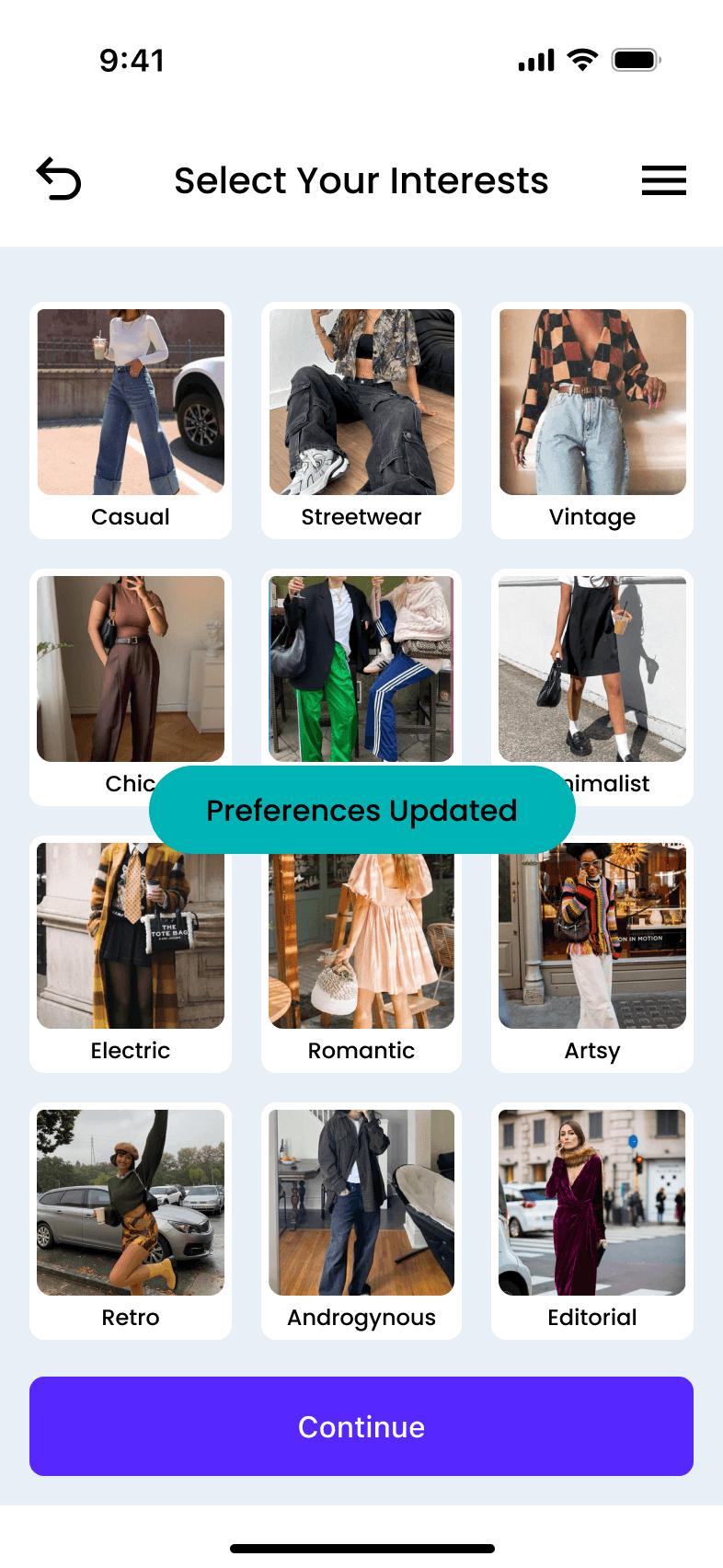
Onboarding Style Coordinator
Onboarding Style Coordinator
Primary Goal:
Allow users to understand, choose, and curate their personal style choices.

Sprint 1
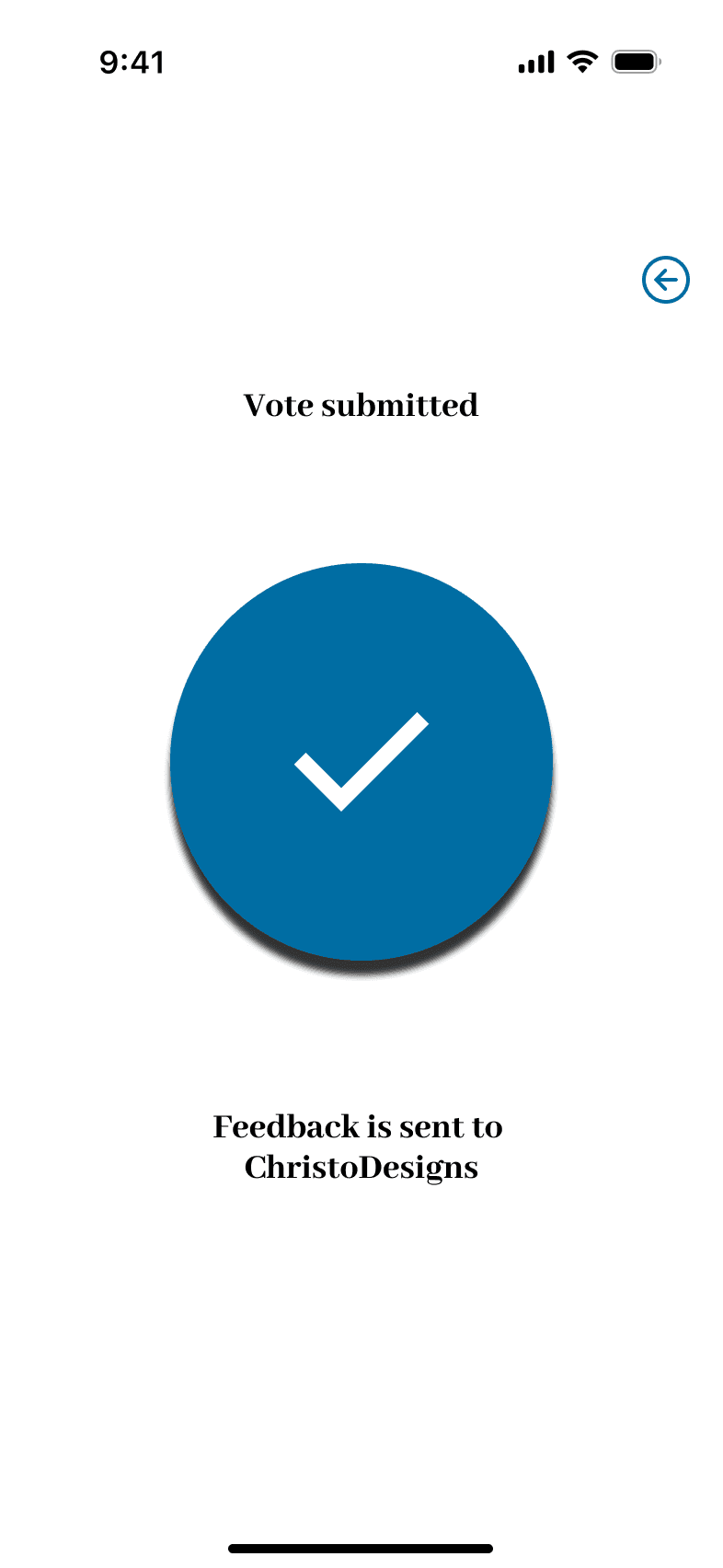
Live Voting Feature
Live Voting Feature
Primary Goal:
Allow users to understand, choose, and curate their personal style choices.
Primary Goal:
Allow users to vote socially on other users fashion interests or clothing types
Sprint 1
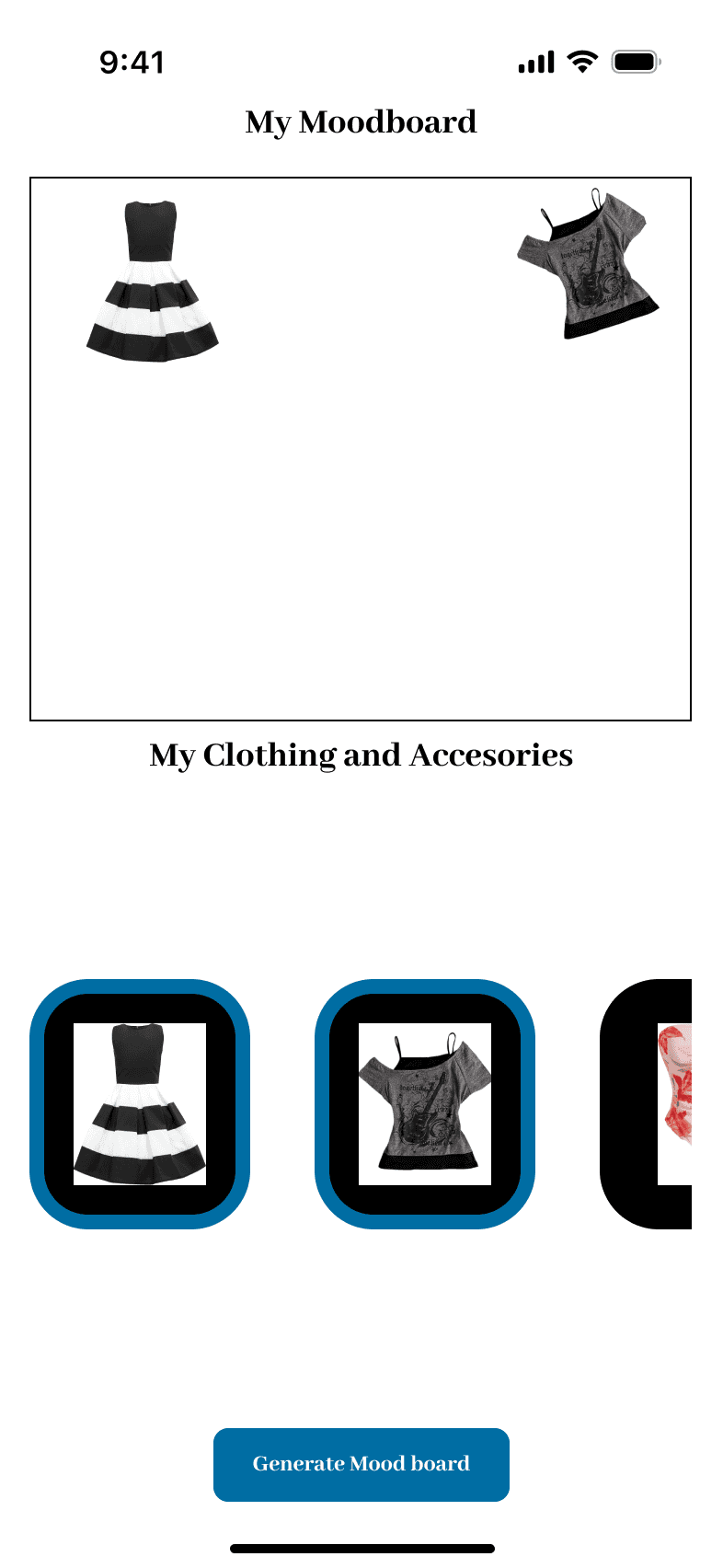
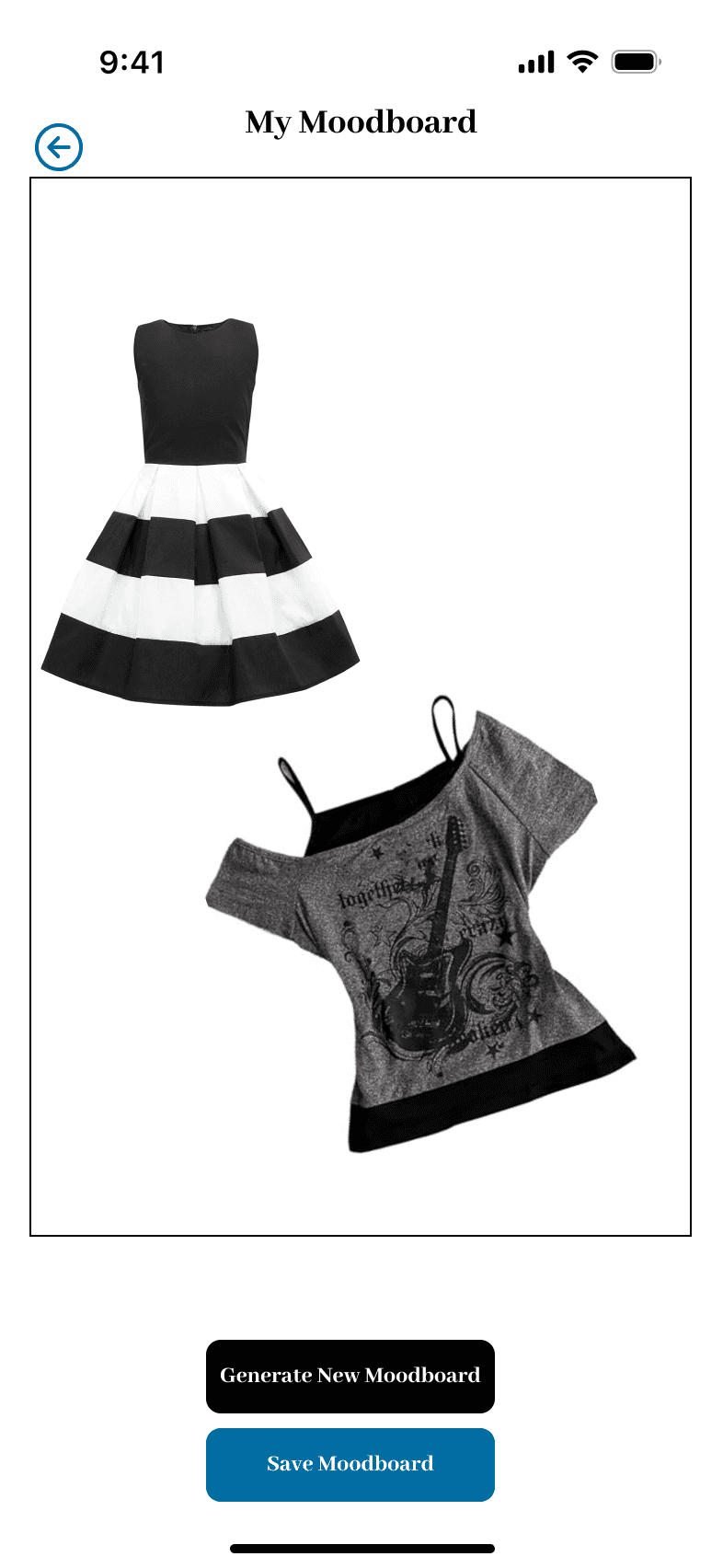
Custom Moodboard Library Collection
Custom Moodboard Library Collection
Primary Goal:
To allow users to select their own clothing pieces to curate their own fashion moodboard.
Primary Goal:
Allow users to vote socially on other users fashion interests or clothing types
Sprint 1
Custom Moodboard Library Collection
Primary Goal:
To allow users to select their own clothing pieces to curate their own fashion moodboard.
Sprint 1
Feedback and data
Feedback and data
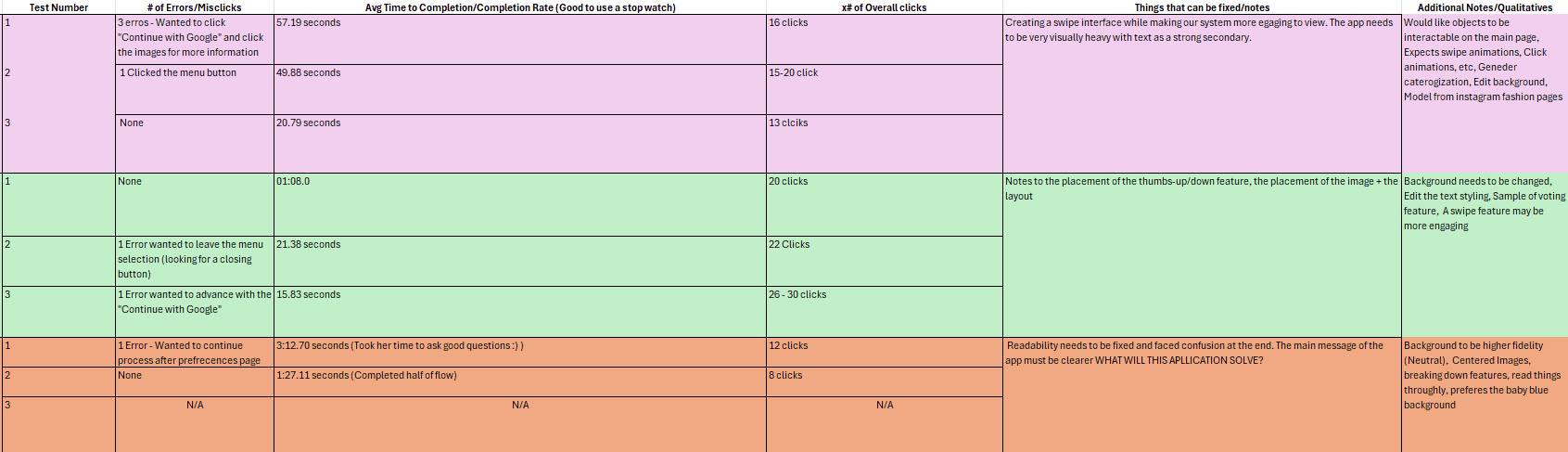
The majority of our tests collected quantitative and qualitative data in relation to our users' behaviors. Quantitative data were utilized to see overall time till task completion and measure learnability. Our qualitative data consisted of user-based suggestions regarding our application from our testing. These recommendations or improvements to our product allowed our team to ideate new decisions for Sprint 2.
Sprint 1 insights:
Clearer visual hierarchy
Users at times got lost within our application and some task took longer than expected
More expansive features and explanations
Users postivly commented on features we had, so they wanted to follow up
A focus more on education features and style curation
Users wanted the application to feel more personal than social
The majority of our tests collected quantitative and qualitative data in relation to our users' behaviors. Quantitative data were utilized to see overall time till task completion and measure learnability. Our qualitative data consisted of user-based suggestions regarding our application from our testing. These recommendations or improvements to our product allowed our team to ideate new decisions for Sprint 2
Sprint 1 insights:
Clearer visual hierarchy
Users at times got lost within our application and some task took longer than expected
More expansive features and explanations
Users postivly commented on features we had, so they wanted to follow up
A focus more on education features and style curation
Users wanted the application to feel more personal than social
The majority of our tests collected quantitative and qualitative data in relation to our users' behaviors. Quantitative data were utilized to see overall time till task completion and measure learnability. Our qualitative data consisted of user-based suggestions regarding our application from our testing. These recommendations or improvements to our product allowed our team to ideate new decisions for Sprint 2.
Sprint 1 insights:
Clearer visual hierarchy
Users at times got lost within our application and some task took longer than expected
More expansive features and explanations
Users postivly commented on features we had, so they wanted to follow up
A focus more on education features and style curation
Users wanted the application to feel more personal than social
Sprint 1 Ending
Sprint 1 Retrospective
After our first sprint, my team discussed why new changes are needed for users. Based on our user feedback and team structure, we need to improve the following:
1. Weekly team communication
2. Expanding on user-preferred features and application changes
3. Assignments for new MVPs prototyping for sprint 2
After our first sprint, my team discussed why new changes are needed for users. Based on our user feedback and team structure, we need to improve the following:
1. Weekly team communication
2. Expanding on user-preferred features and application changes
3. Assignments for new MVPs prototyping for sprint 2
After our first sprint, my team discussed why new changes are needed for users. Based on our user feedback and team structure, we need to improve the following:
1. Weekly team communication
2. Expanding on user-preferred features and application changes
3. Assignments for new MVPs prototyping for sprint 2
Sprint 2
Sprint 2
Sprint 2 Introduction
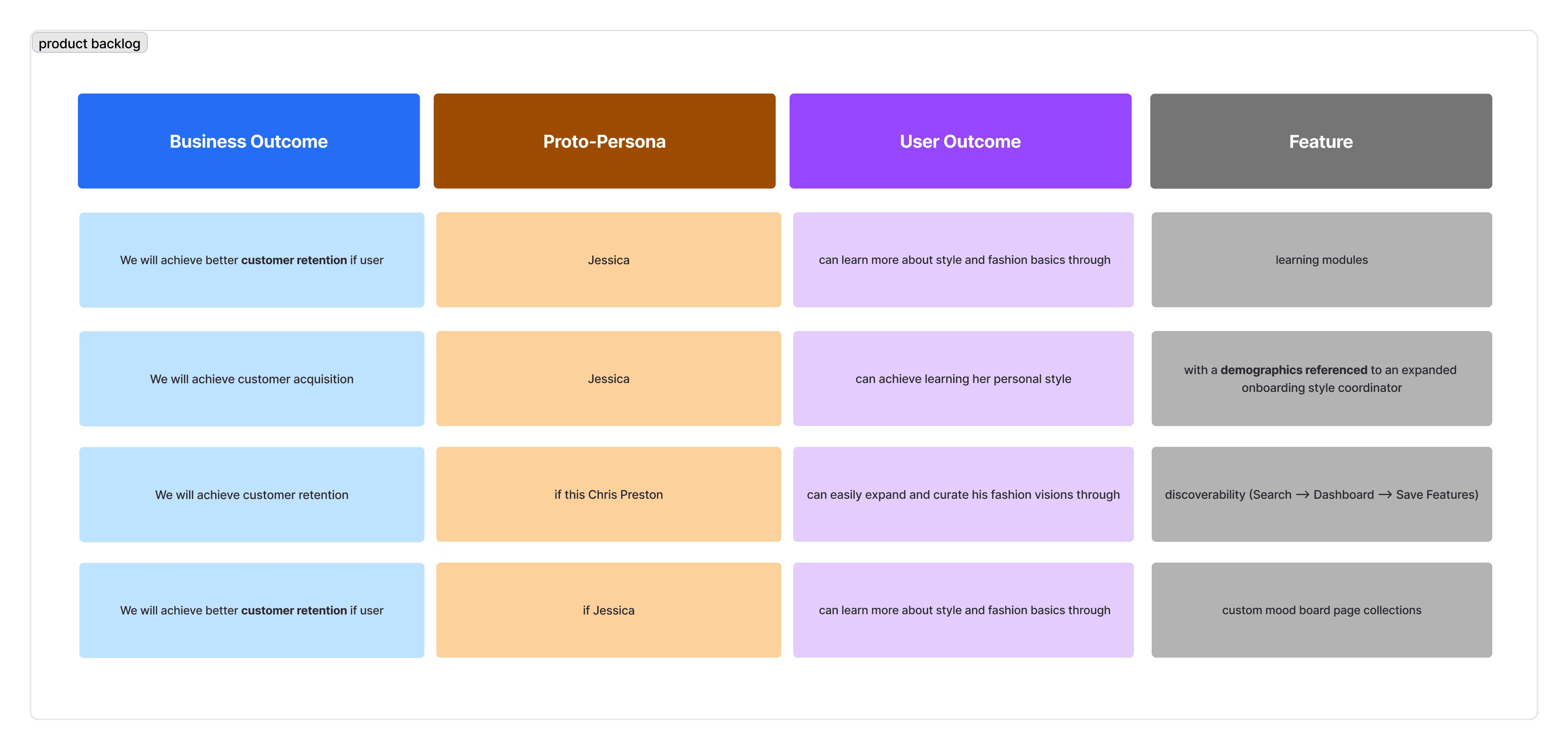
To start Sprint 2 my team and I primarliy learned that our users wanted a more personalized experience. An experience that allowed them to view a variety a styles, store them, and learn fashion education at their own pace and freedom. Thus, we needed to elimate the live voting feature and edit our original product backlog and MVPs
MVP 1 - Add learning modules
MVP 2 - More personalized onboarding (demographics refrenced)
MVP 3 - Options for mood board discoverability
MVP 4 - Custom mood board page collections
To start Sprint 2 my team and I primarliy learned that our users wanted a more personalized experience. An experience that allowed them to view a variety a styles, store them, and learn fashion education at their own pace and freedom. Thus, we needed to elimate the live voting feature and edit our original product backlog and MVPs
MVP 1 - Add learning modules
MVP 2 - More personalized onboarding (demographics refrenced)
MVP 3 - Options for mood board discoverability
MVP 4 - Custom mood board page collections
Sprint 2 Introduction
Sprint 2 Backlog
To start Sprint 2, my team and I primarily learned that our users wanted a more personalized experience. An experience that allowed them to view a variety of styles, store them, and learn fashion education at their own pace and freedom. Thus, we needed to eliminate the live voting feature and edit our original sprint backlog and MVPs.
Add learning modules
More personalized onboarding (demographics referenced)
Options for mood board discoverability
Custom mood board page collections
Sprint 2
From Low to High Fidelity Designs
Similar to sprint 1, we interviewed and tested 6 total individuals who had a wide range of fashion expertise. Users tested navigation, newly added features, and new interactions, and we gained supplemental feedback.
Sprint 2 MVPs.
Create gamified learning modules
Update onboarding to be more personalized (demographics referenced)
More detailed onboarding style coordinator
Expanding streamlined save, discovery, navigation features
Similar to sprint 1, we interviewed and tested 6 total individuals who had a wide range of fashion expertise. Users tested navigation, newly added features, and new interactions, and we gained supplemental feedback.
Sprint 2 MVPs.
Create gamified learning modules
Update onboarding to be more personalized (demographics referenced)
More detailed onboarding style coordinator
Expanding streamlined save, discovery, navigation features
Sprint 2
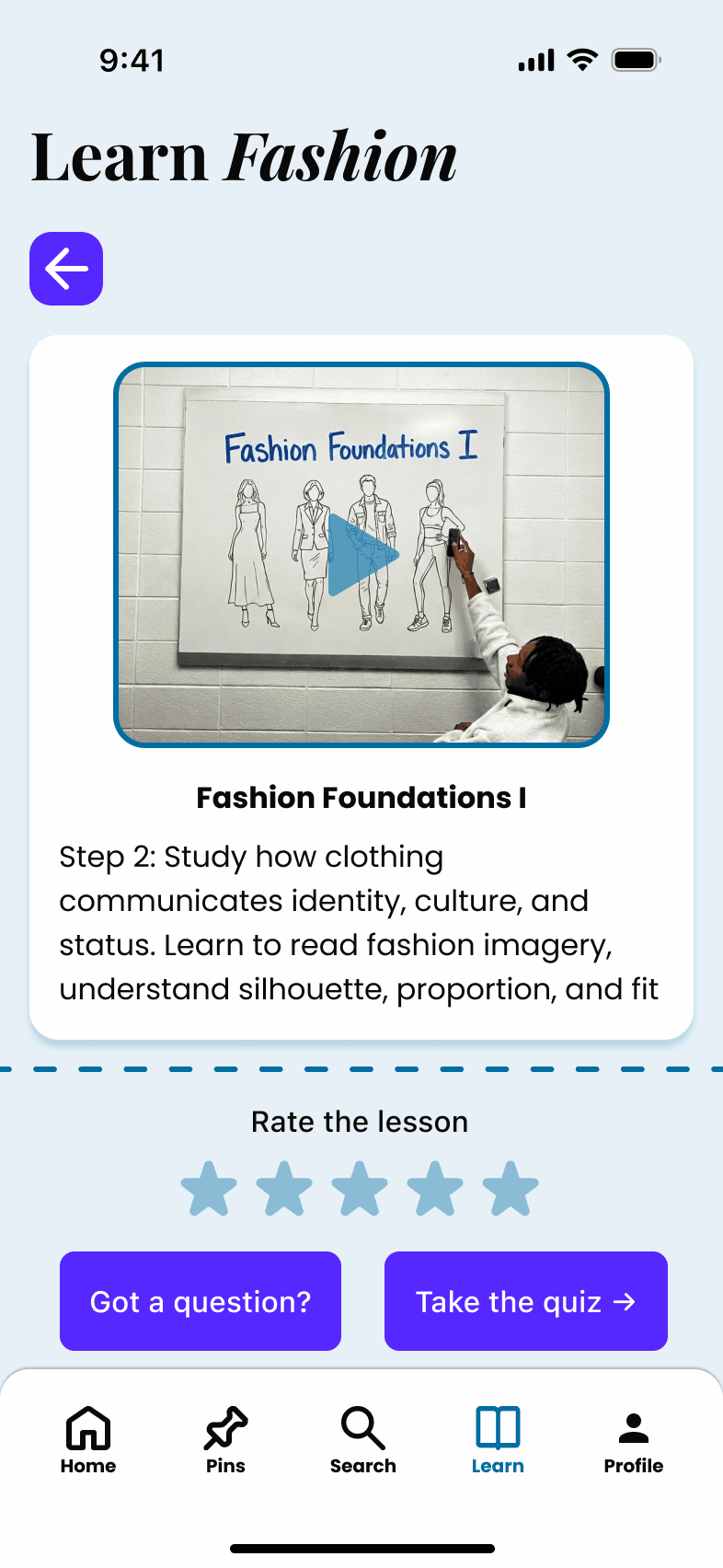
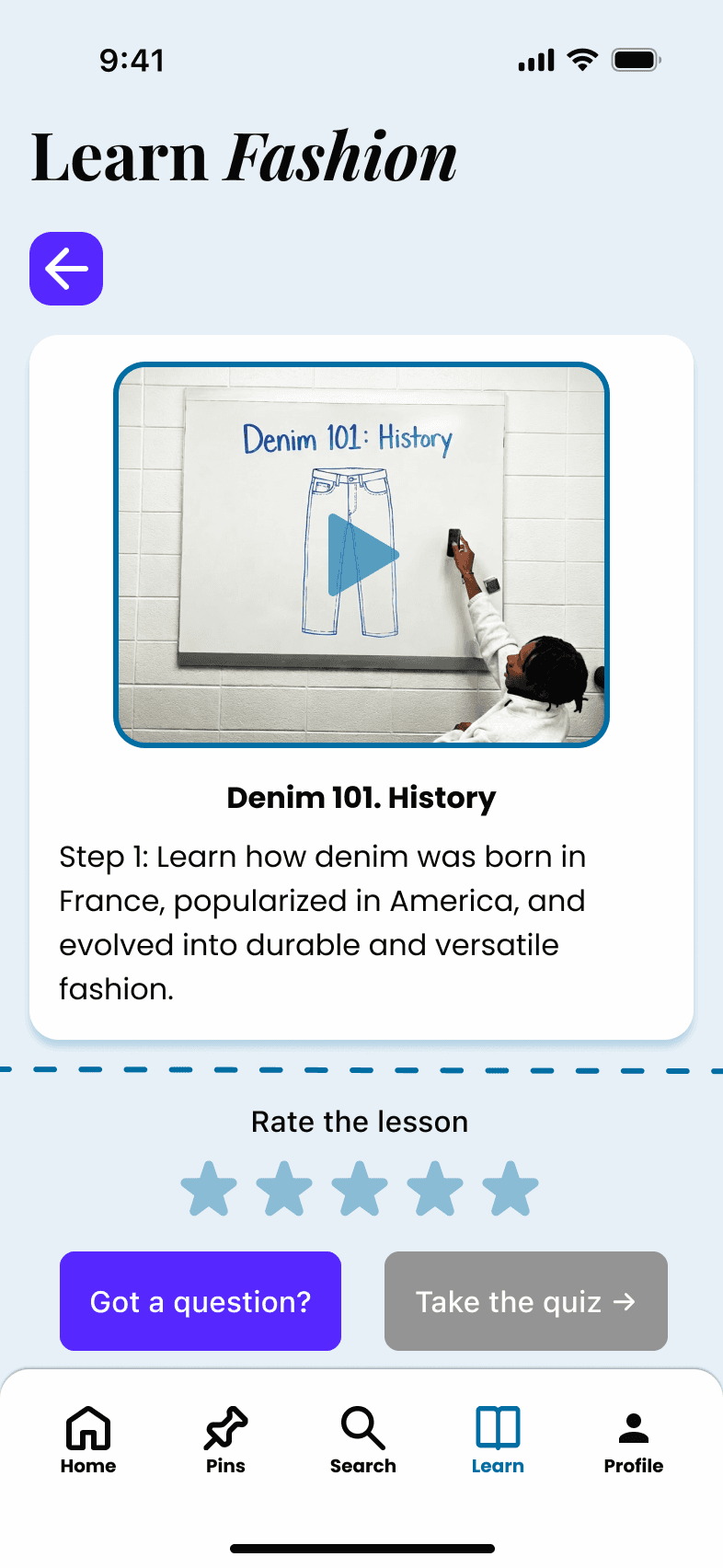
Learning Modules
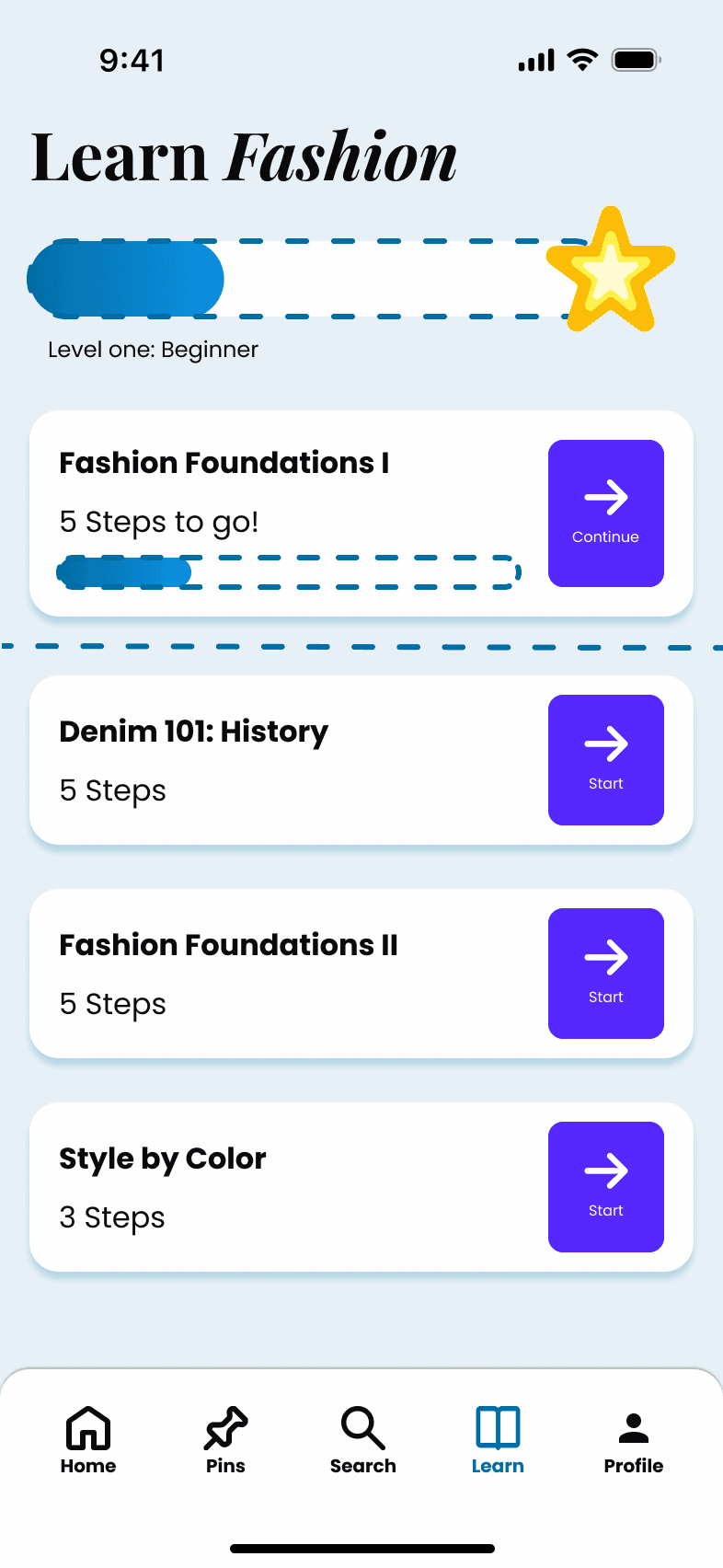
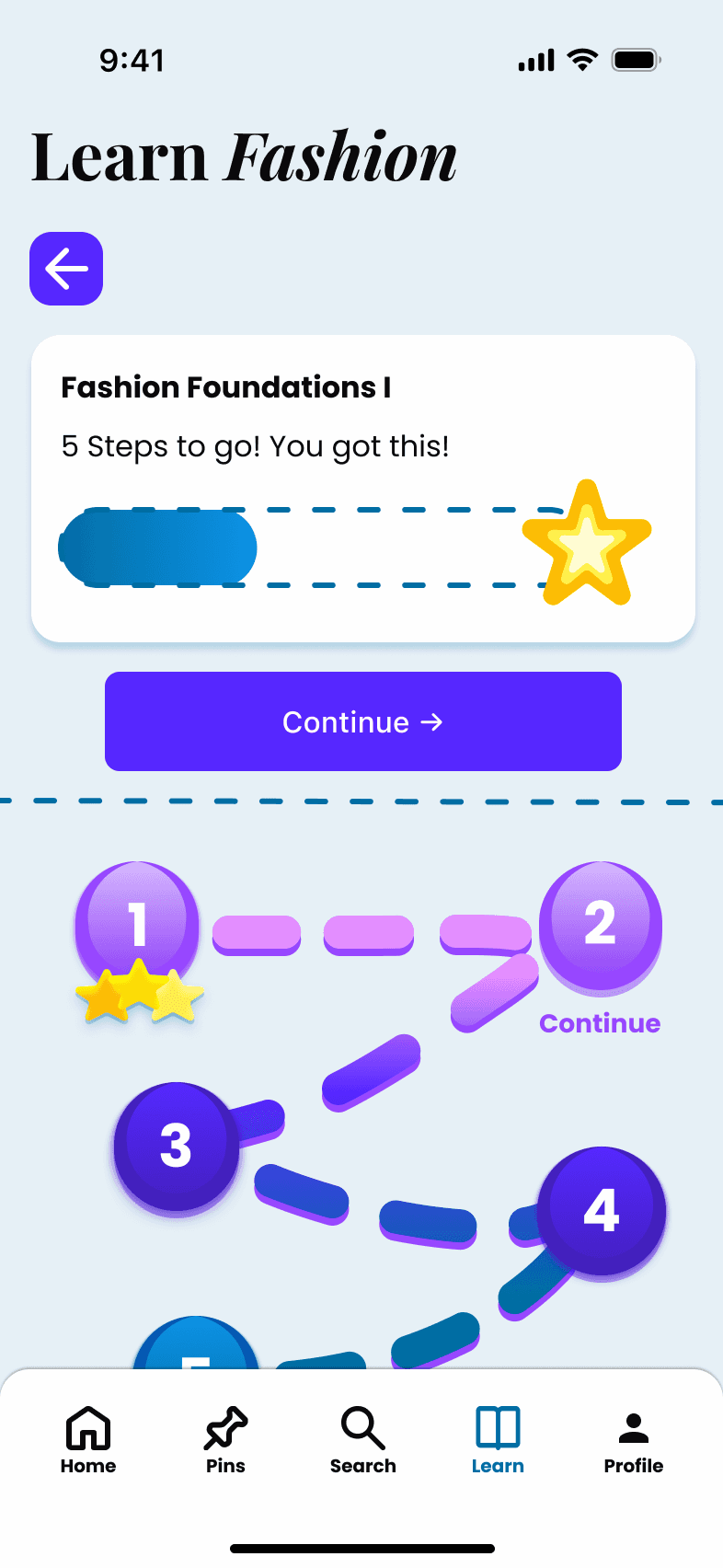
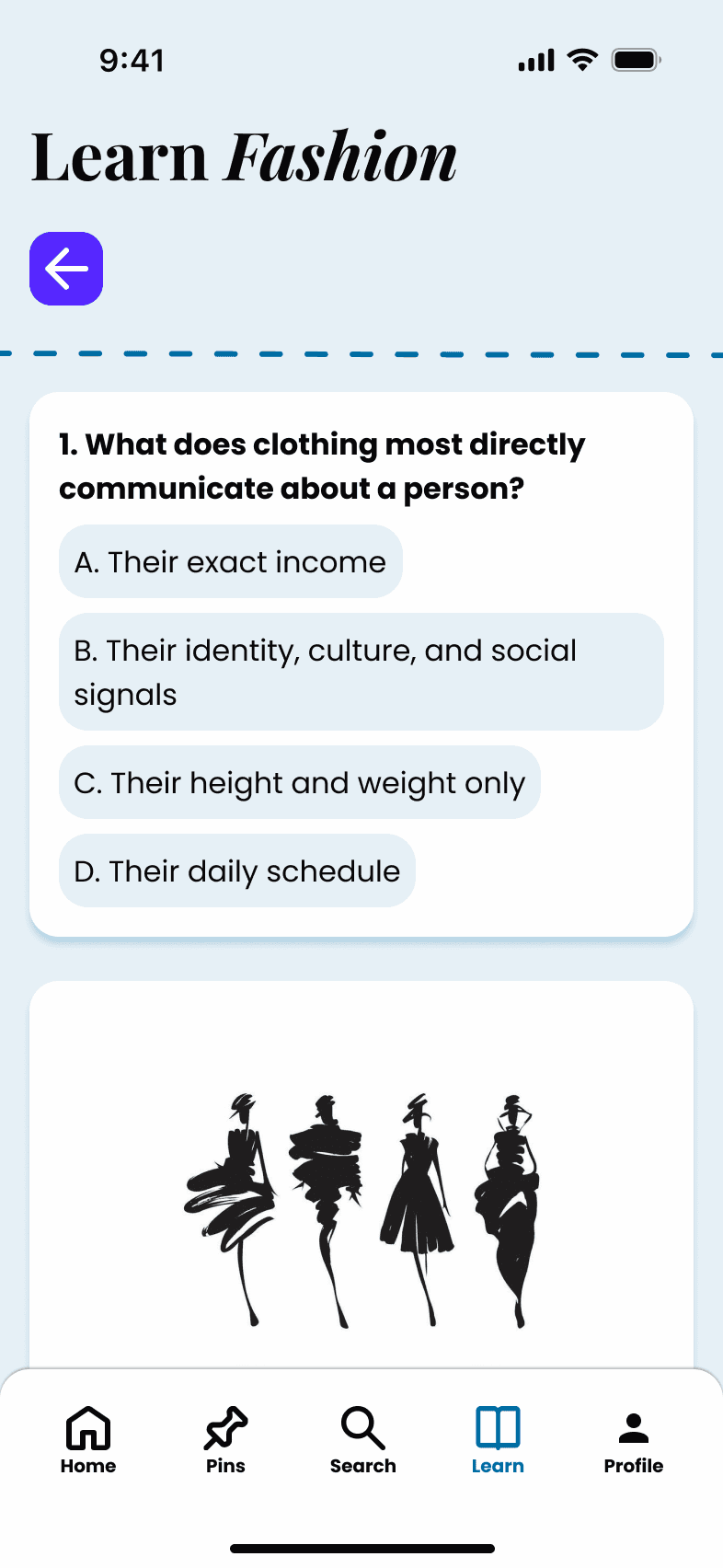
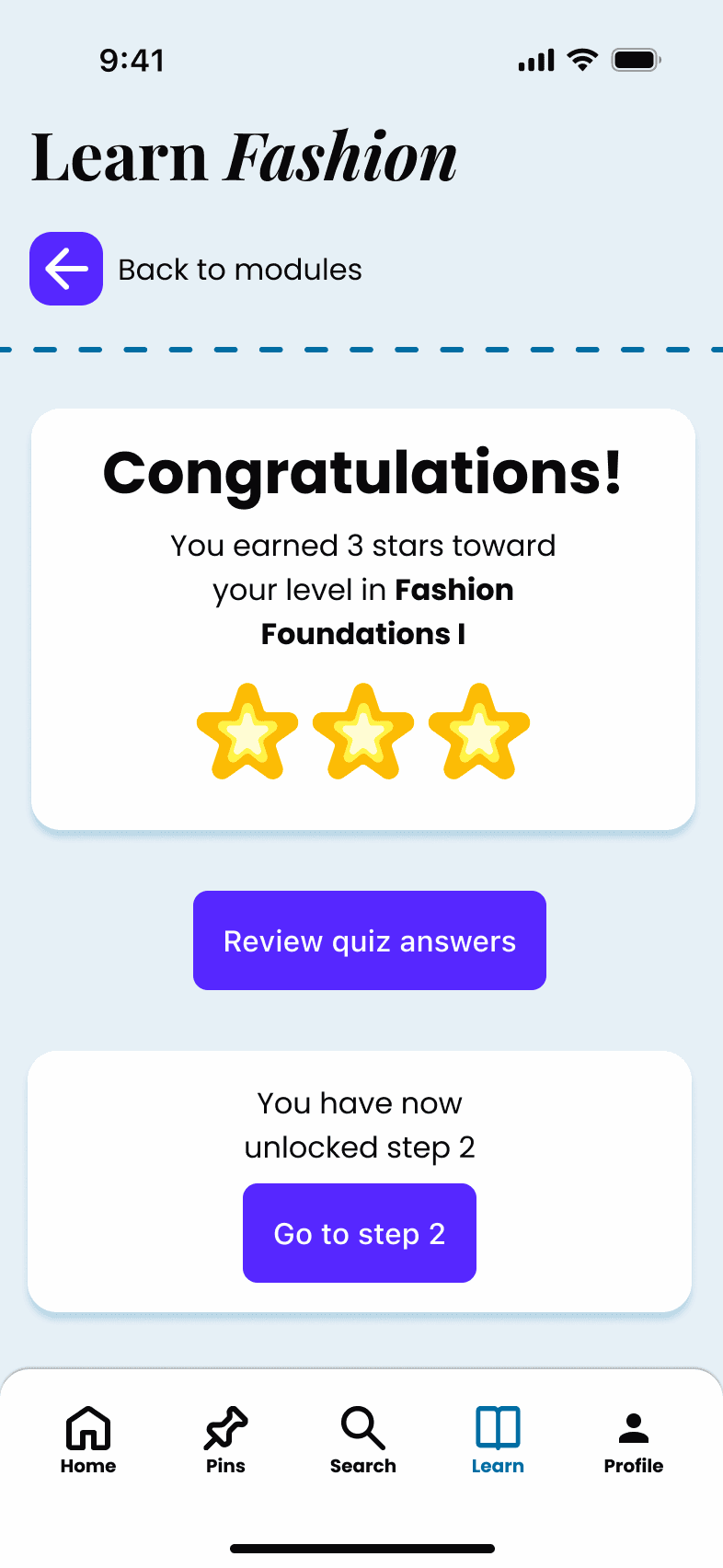
We wanted our users to see what it would be like to have a structure module section with a friendly user interface. We wanted to make our system a simple step proceed and allow navigational ease
Feedback from testing: Users wanted complete freedom to choose between any module instead of a linear learning structure.
Result: User were able to see multiple starting points to different fashion education modules.
We wanted our users to see what it would be like to have a structure module section with a friendly user interface. We wanted to make our system a simple step proceed and allow navigational ease
Feedback from testing: Users wanted complete freedom to choose between any module instead of a linear learning structure.
Result: User were able to see multiple starting points to different fashion education modules.
Sprint 2
Sprint 2
New mood board collection pages
We wanted our users to see what it would be like to have a structure module section with a friendly user interface. We wanted to make our system a simple step proceed and allow navigational ease
Feedback from testing: Users wanted complete freedom to choose between any module instead of a linear learning structure.
Result: User were able to see multiple starting points to different fashion education modules.
We wanted our users to see what it would be like to have a structure module section with a friendly user interface. We wanted to make our system a simple step proceed and allow navigational ease
Feedback from testing: Users wanted complete freedom to choose between any module instead of a linear learning structure.
Result: User were able to see multiple starting points to different fashion education modules.
1st Iteration
Sprint 1 Iteration
Sprint 1 Iteration
2nd Iteration
Sprint 2 Iteration
Sprint 2 Iteration
Sprint 2
Sprint 2
Discoverability features
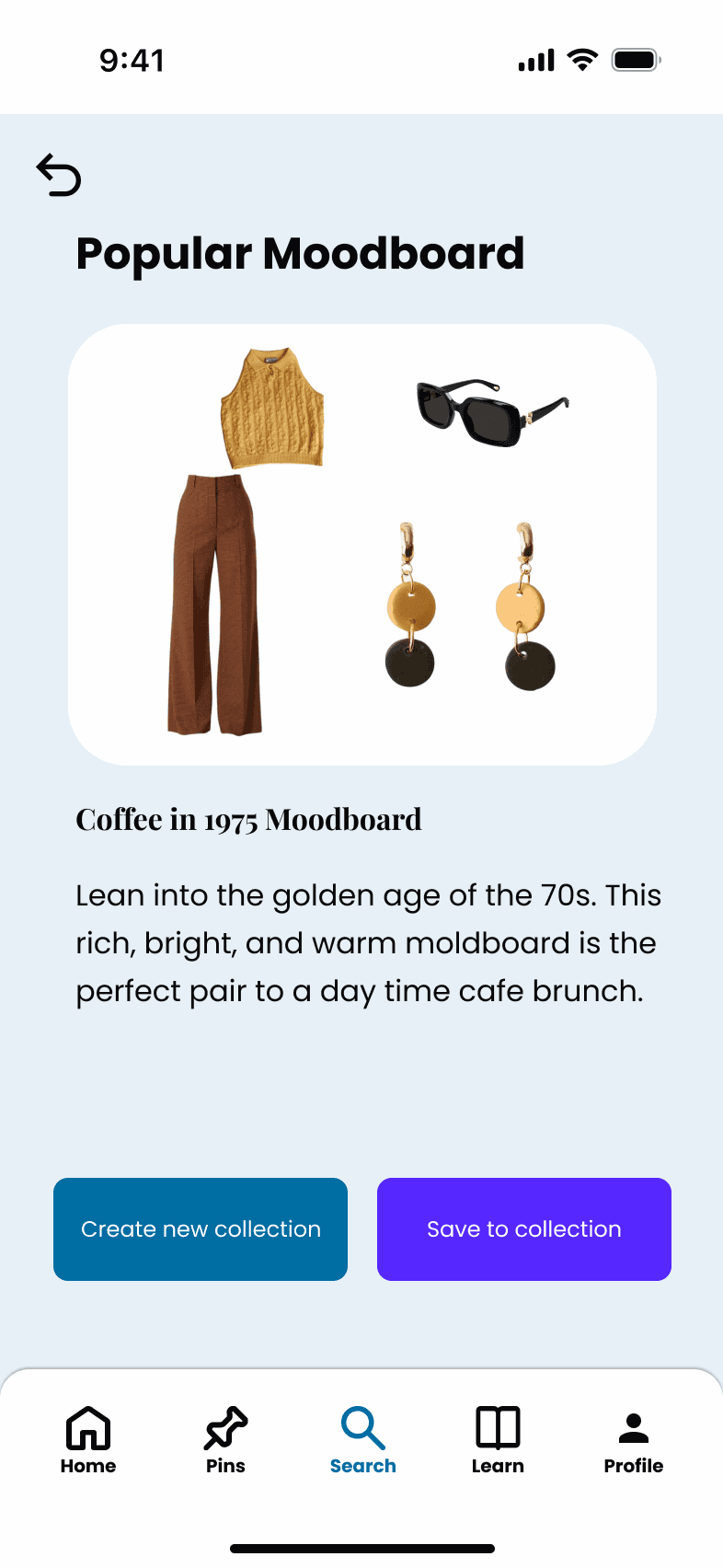
Blueprint is meant to allow users to find mood board that they can freely discover and safe to a collection. We wanted to ensure and limited the mood board customization to pre made boards to help formulate the educational aspects of our application.
Feedback from testing: Users asked for secondary options that veers away from creating your own mood from stratch
Result: Users prefered the discoverability feature over the customization due to the amount of time it can save them.
Blueprint is meant to allow users to find mood board that they can freely discover and safe to a collection. We wanted to ensure and limited the mood board customization to pre made boards to help formulate the educational aspects of our application.
Feedback from testing: Users asked for secondary options that veers away from creating your own mood from stratch
Result: Users prefered the discoverability feature over the customization due to the amount of time it can save them.
Sprint 2
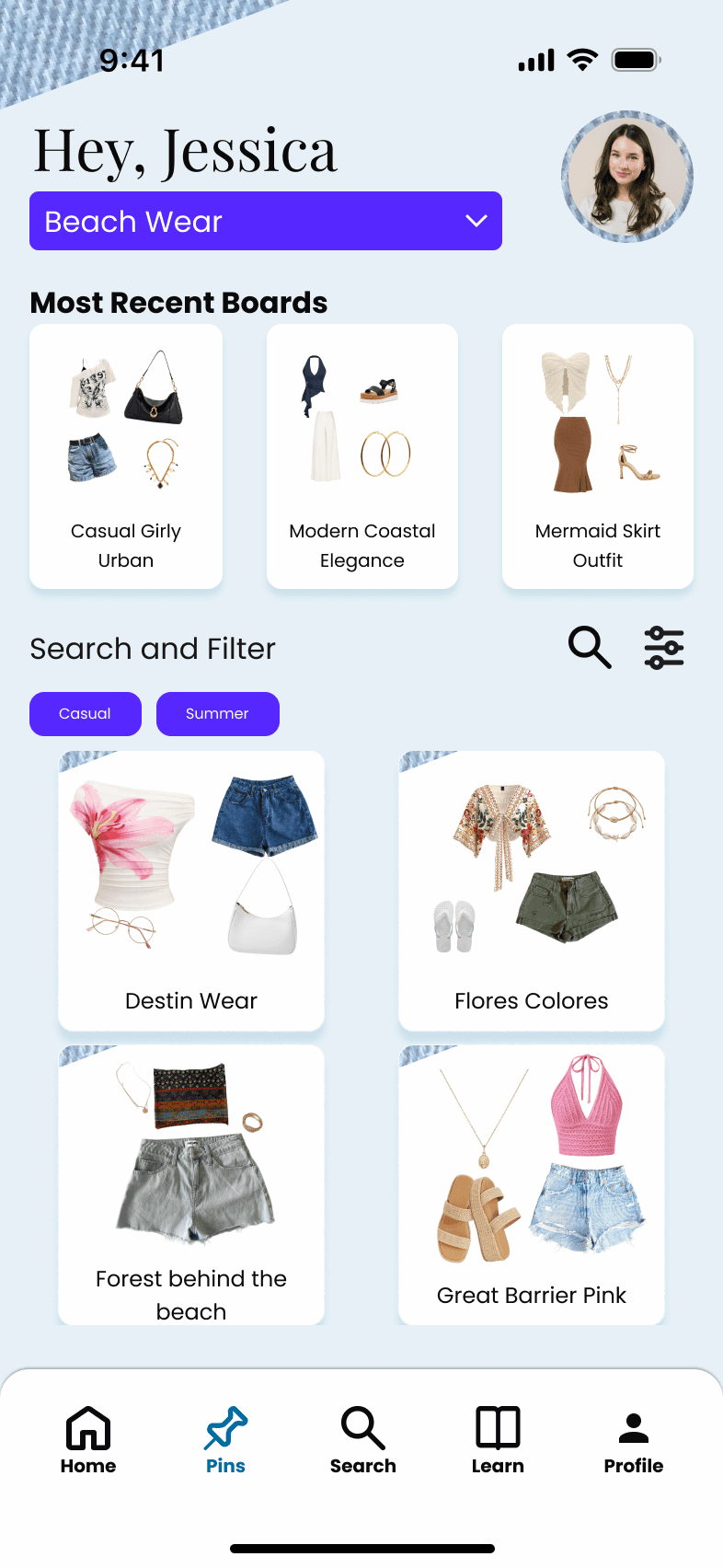
New Mood Board Collection Page
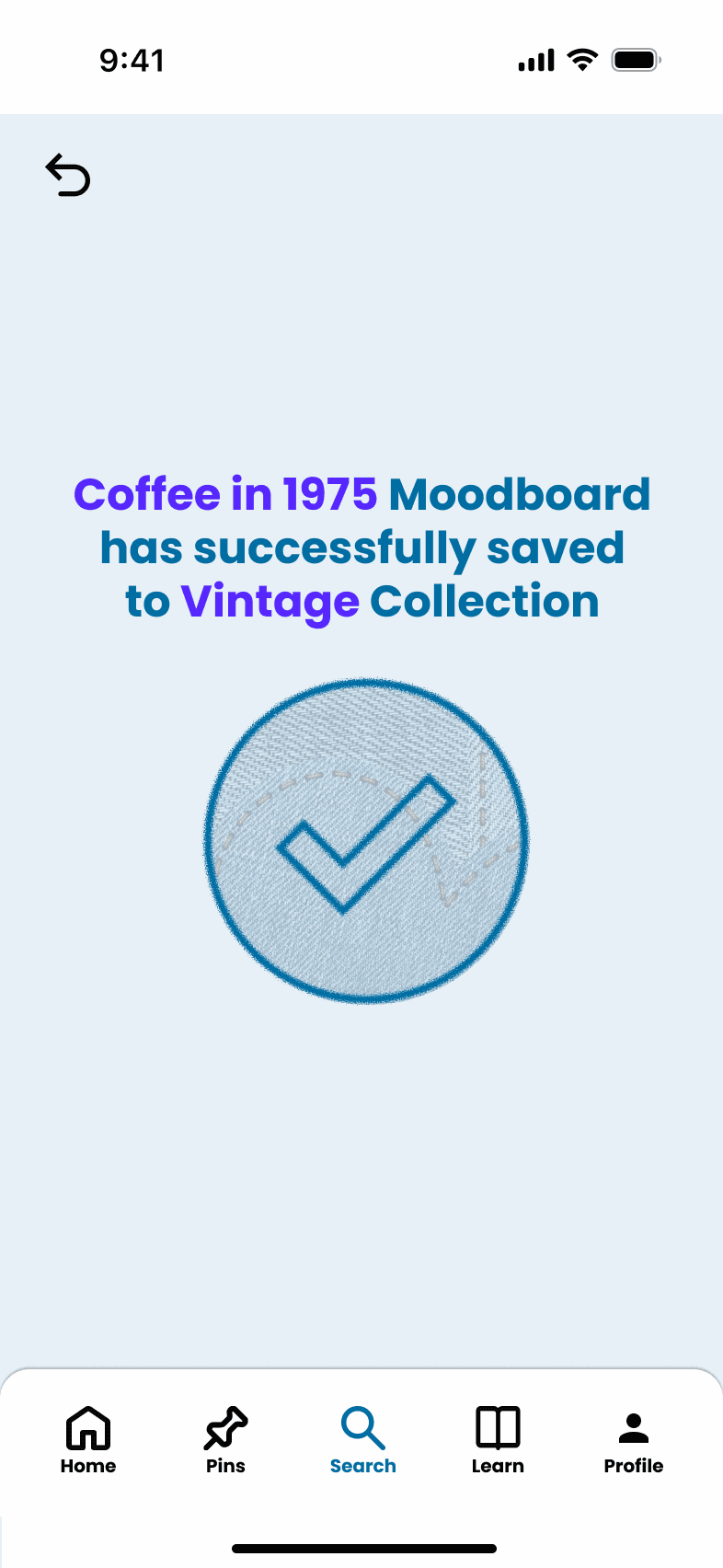
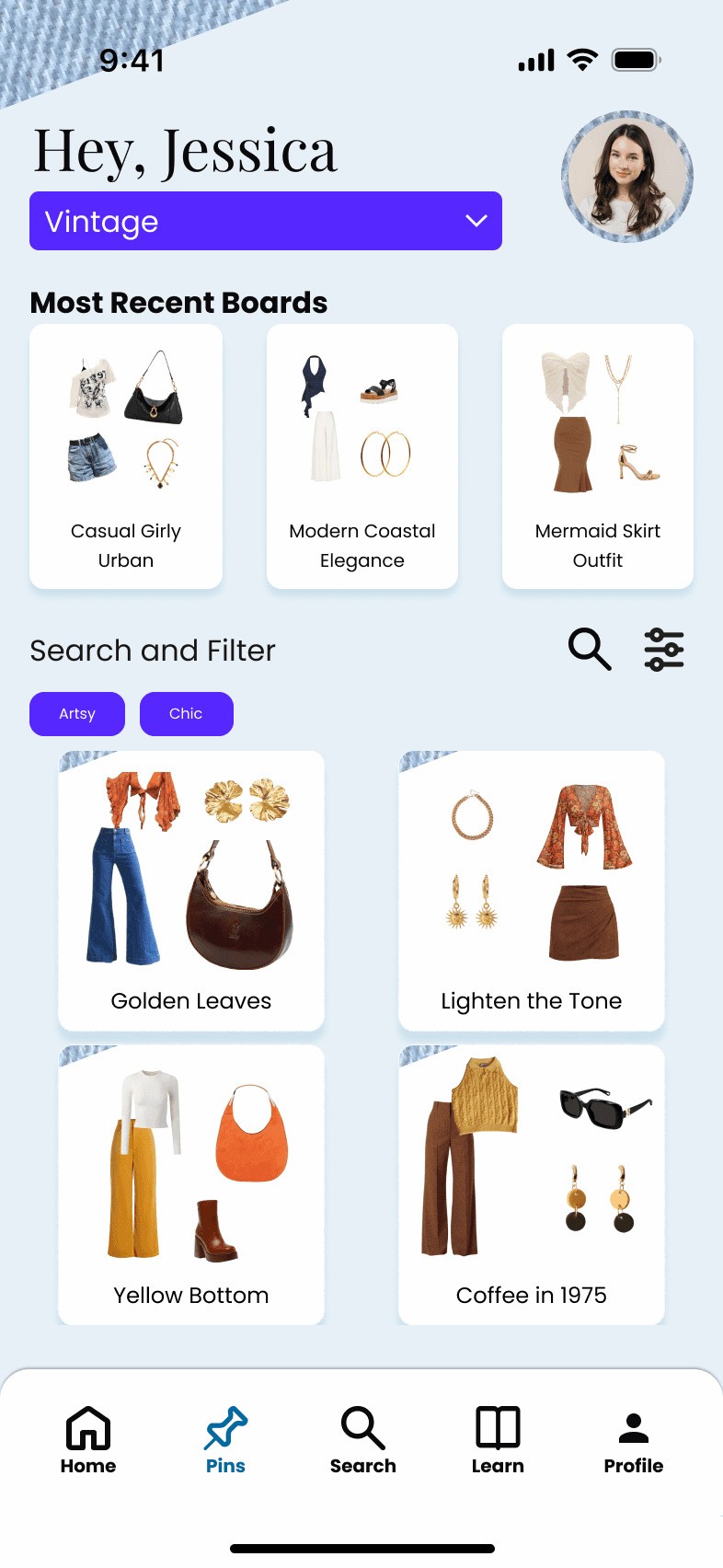
In contrast to our sprint 1 designs, we wanted to create a system where users could see and store their collected moodboards from the discover page in one place. Users can search by the moodboard name, filter by fashion tags, and freely navigate between each section
Feedback from testing: Users wanted a system where you can view all your pre selected mood boards.
Result: Users were able to see and navigate from their various mood board collections instead of creating one from scratch.
Sprint 1 Iteration
Sprint 2 Iteration
Sprint 2
Discoverability Features
Blueprint is meant to allow users to find mood board that they can freely discover and safe to a collection. We wanted to ensure and limited the mood board customization to pre made boards to help formulate the educational aspects of our application.
Feedback from testing: Users asked for secondary options that veers away from creating your own mood from stratch
Result: Users prefered the discoverability feature over the customization due to the amount of time it can save them.
Sprint 2
Retrospective
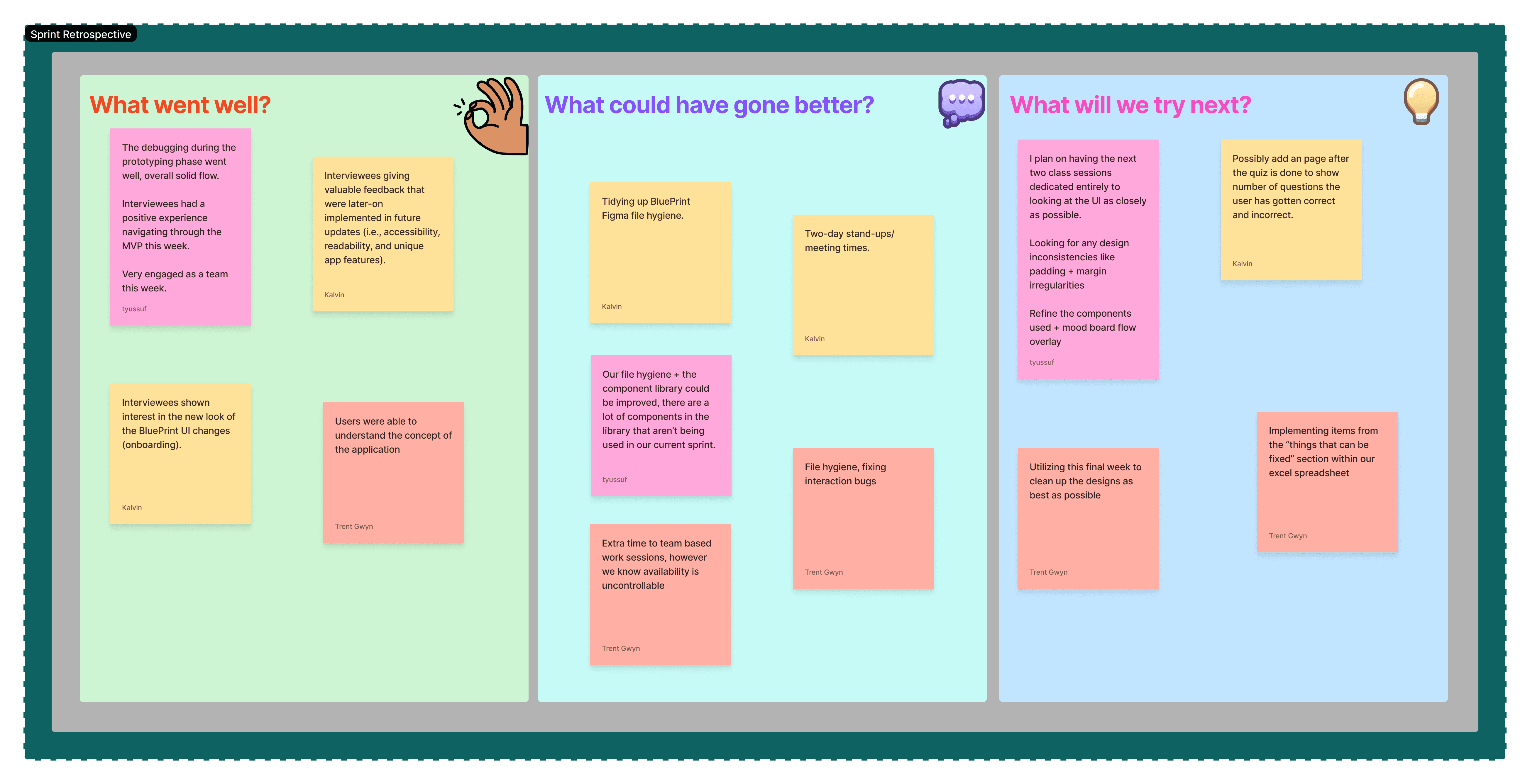
As sprint 2 concluded the team and I went back to the drawing board of what went wrong and what we had accomplished. As we approached the final week our team wanted to focus on the product at hand and the polishing to a complete high fidelity prototype.
Key takeaways for refinements:
Establishing better file hygenine
Cleaning up interaction bugs
Refining our UI
As sprint 2 concluded the team and I went back to the drawing board of what went wrong and what we had accomplished.As we approached the final week our team wanted to focus on the product at hand and the polishing to a complete high fidelity prototype.
Key takeaways for refinements:
Establishing better file hygenine
Cleaning up interaction bugs
Refining our UI
As sprint 2 concluded the team and I went back to the drawing board of what went wrong and what we had accomplished. As we approached the final week our team wanted to focus on the product at hand and the polishing to a complete high fidelity prototype.
Key takeaways for refinements:
Establishing better file hygenine
Cleaning up interaction bugs
Refining our UI
Final Stages
Refinements and Consistancy
During our final week, we wanted to ensure our system was as consistent as possible. By refining our color styles, the soft 8-pt grid, and text consistency.
During our final week, we wanted to ensure our system was as consistent as possible. By refining our color styles, the soft 8-pt grid, and text consistency.
During our final week, we wanted to ensure our system was as consistent as possible. By refining our color styles, the soft 8-pt grid, and text consistency.
Final Stages
Final 5 Week Result of Blueprint
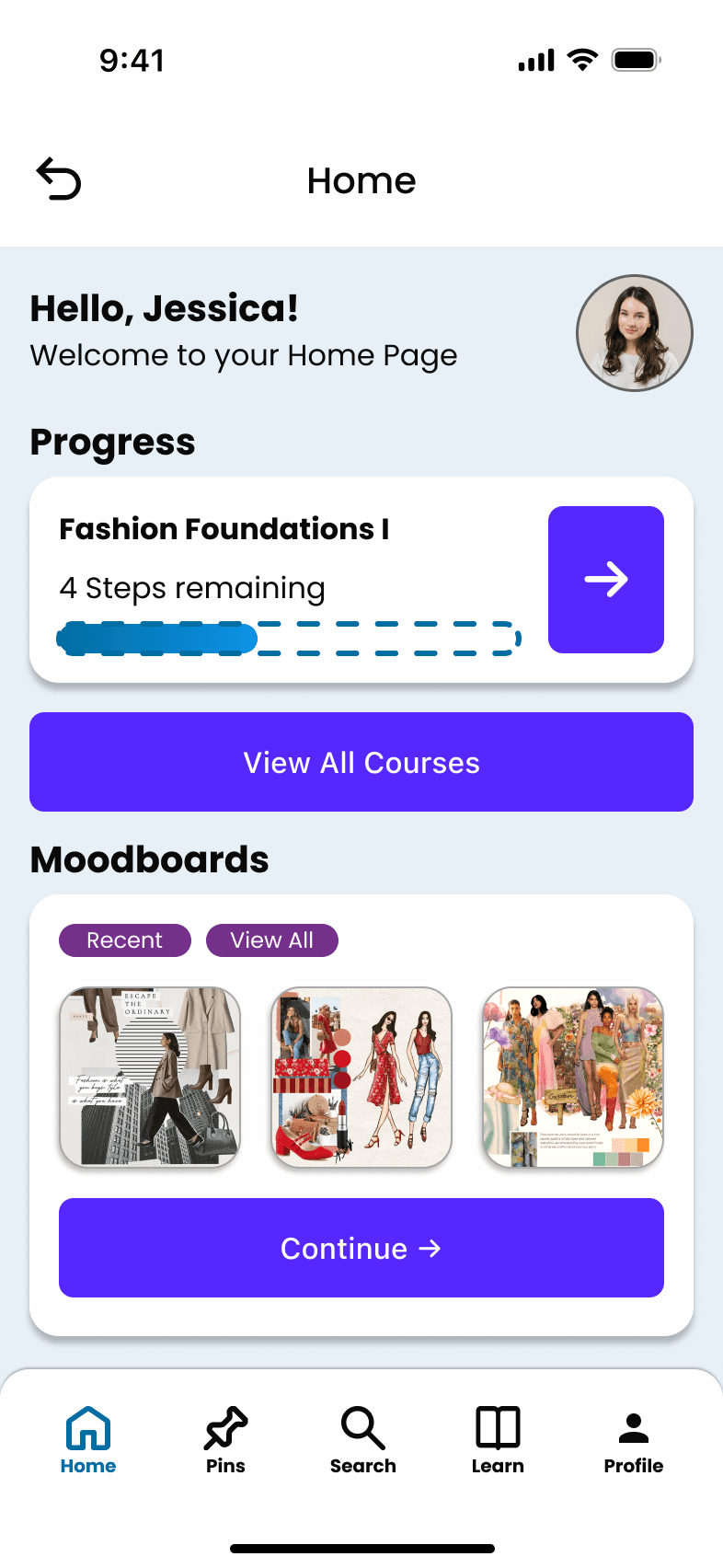
In only 5 weeks, we were able to create a fully functional prototype that exemplifies Blueprint's core features and functionality. The final goal of Blueprint is to help educate users on their personal style through simple learning modules, discoverability, and style curation.
In only 5 weeks, we were able to create a fully functional prototype that exemplifies Blueprint's core features and functionality. The final goal of Blueprint is to help educate users on their personal style through simple learning modules, discoverability, and style curation.
In only 5 weeks, we were able to create a fully functional prototype that exemplifies Blueprint's core features and functionality. The final goal of Blueprint is to help educate users on their personal style through simple learning modules, discoverability, and style curation.
Reflection
Lessons Learned
Understand team availability - Our team works well together well with the time we have, however, college student availability is tight. Thus, navigating our design decisions and shared understanding posed a challenge.
Time is an asset - Time is your biggest asset, the more you put in the more you get out. I needed to learn how to scale and manage my time better.
Rethink and iterate my design decisions - Due to time constraignts basic design thinking skills were slightly altered. Common 8pt grid practice, equal spacing, and distrubution of colors. The you are truly never done always ask "why."
Understand team availability - Our team works well together well with the time we have, however, college student availability is tight. Thus, navigating our design decisions and shared understanding posed a challenge.
Time is an asset - Time is your biggest asset, the more you put in the more you get out. I needed to learn how to scale and manage my time better.
Rethink and iterate my design decisions - Due to time constraignts basic design thinking skills were slightly altered. Common 8pt grid practice, equal spacing, and distrubution of colors. The you are truly never done always ask "why."
Understand team availability - Our team works well together well with the time we have, however, college student availability is tight. Thus, navigating our design decisions and shared understanding posed a challenge.
Time is an asset - Time is your biggest asset, the more you put in the more you get out. I needed to learn how to scale and manage my time better.
Rethink and iterate my design decisions - Due to time constraignts basic design thinking skills were slightly altered. Common 8pt grid practice, equal spacing, and distrubution of colors. The you are truly never done always ask "why."
Copyright 2026 by Trenton Gwyn
Copyright 2026 by Trenton Gwyn